Key Takeaways
- Hopelessness, purposelessness and helplessness do more damage in later life than most people recognise — and each one feeds the others.
- A sense of direction cannot be manufactured on demand. It surfaces through a process of discovery.
- Two questions do most of the work: what would you do if you were not limited by time or money, and what actually matters to you?
The visit that changed my career
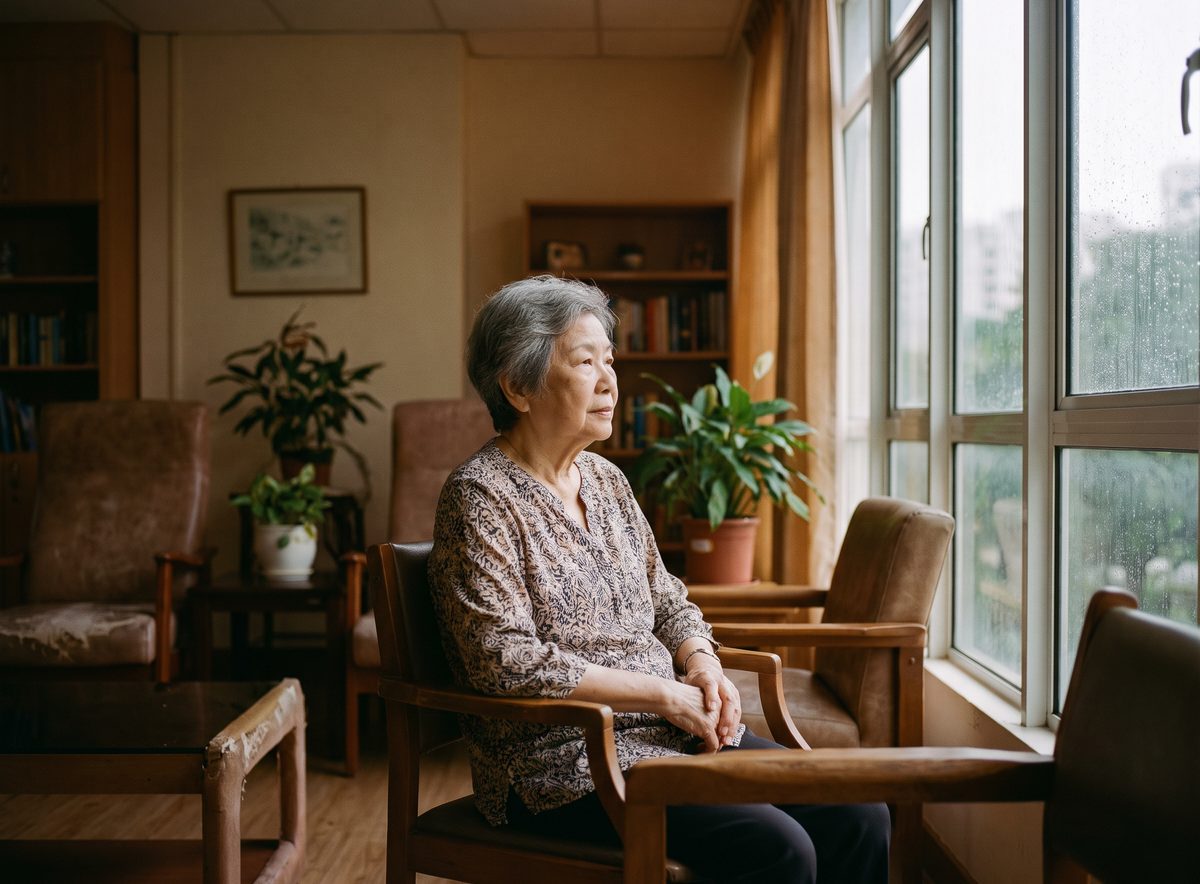
The year was 2007. I was visiting a nursing home in Singapore, and I walked out of it a different person than I walked in.
It was not the frailty that struck me. I had expected the frailty. It was the stillness — rows of people with years of life left in them and nothing at all to move toward. Nobody was asking them what they still wanted. It had apparently stopped occurring to anyone that they might still want something.
That visit set the direction of everything I have done since.
Three things that hollow a person out
Watching people age — in institutions, and long before them — I have come to think three feelings do most of the damage:
- Hopelessness — having no promising future to move toward
- Purposelessness — the sense of being lost, or of no longer being needed by anyone
- Helplessness — believing you cannot do anything about your own situation
I am not the first person to land near this. The geriatrician Bill Thomas founded the Eden Alternative in 1991 after years of watching nursing home residents decline for reasons that were not medical, and named what he called the three plagues: loneliness, helplessness and boredom.
Whichever words you use, the conclusion holds: what breaks people down in later life is very often not a disease.
Retirement removes the scaffolding all at once
Work quietly supplies four things at the same time: a structure to the day, an identity, a set of people, and a reason to get up. Retirement removes all four on the same afternoon.
If nothing has been built to replace them, what was supposed to be the reward becomes the emptiest stretch of a person's life. That is not a failure of character. It is a predictable consequence of planning an exit without planning an arrival.
Where a sense of direction actually comes from
Here is the part people find inconvenient: you cannot simply decide to have a purpose the way you decide to buy a treadmill. It comes through a process of discovery, and it is usually reconstructed from evidence you already have rather than invented on the spot.
You cannot retrieve a purpose you have never put into words. But you can remember a particular year that mattered, and why. So work through your life in order — childhood, your twenties and thirties, your forties and fifties, now — and sit with these questions:
- What mattered to me then, and what was I proud of?
- What is important to me now?
- If I were not limited by time or money, what would I do?
Give it four sittings rather than one evening, write it on paper, and do it alongside one other person if you can.
Then do something for someone else
Purpose tends to arrive through contribution rather than reflection, and the best insights came from 2,887 older Singaporeans. Those who volunteered reported better quality of life, with personal mastery — the sense that you have some control, and some effect on someone else (Ang & Malhotra, 2024, Journals of Gerontology).
One detail is worth not skipping. That sense of control came only from volunteering regularly, with a club or an organisation — a fixed commitment, at a fixed time each week. Helping out occasionally, or informally, made life better too, but not in the same way.
So commit to one thing that is for somebody else, at a fixed time and place each week.
Why this comes first
This is Step 1 of the 7 ProAgeing Steps, and it is first for a reason. Strength, energy, sleep and a clear mind are what make the life you want reachable. But they are the enablers. Something has to be worth enabling.